
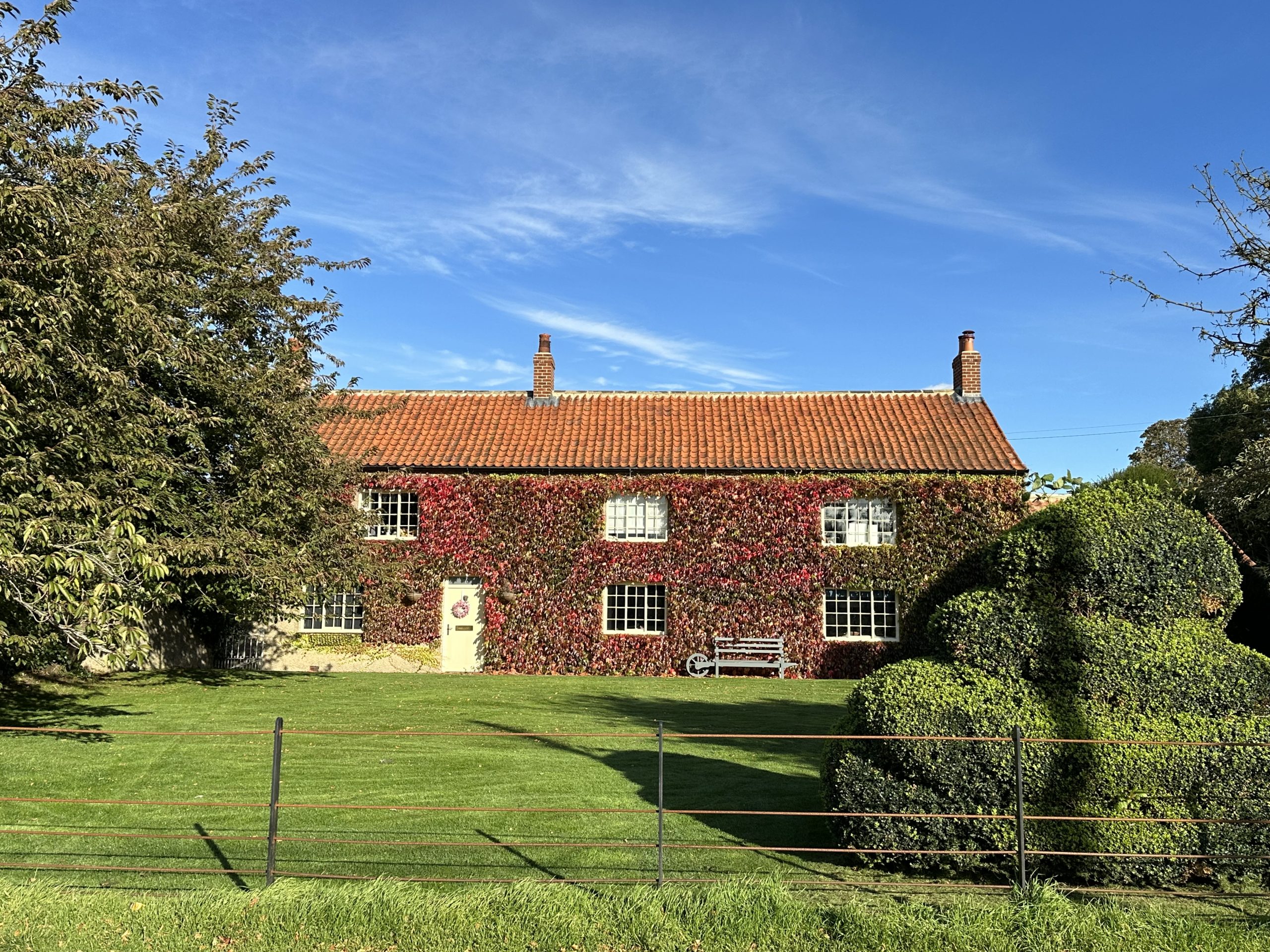
A Knight at Rectory Farm
Walk along Low Moorgate in Rillington and it is easy to overlook Rectory Farm. Behind later alterations and brickwork lies one of the oldest surviving buildings in the village, a house whose story stretches back centuries.
Yet hidden within that story is an intriguing question. Did a knight once live here?
Rectory Farm has long been associated with the former rectory estate of Rillington. During research into the history of the property, I discovered plans produced during a restoration in 1953 for Nigel Hudleston, a descendant of John Simpson/Hudleston, the Lord of the Manor of Rillington. The plans suggested that parts of the building dated from around 1500–1530 and included a coat of arms for the Etherington family.
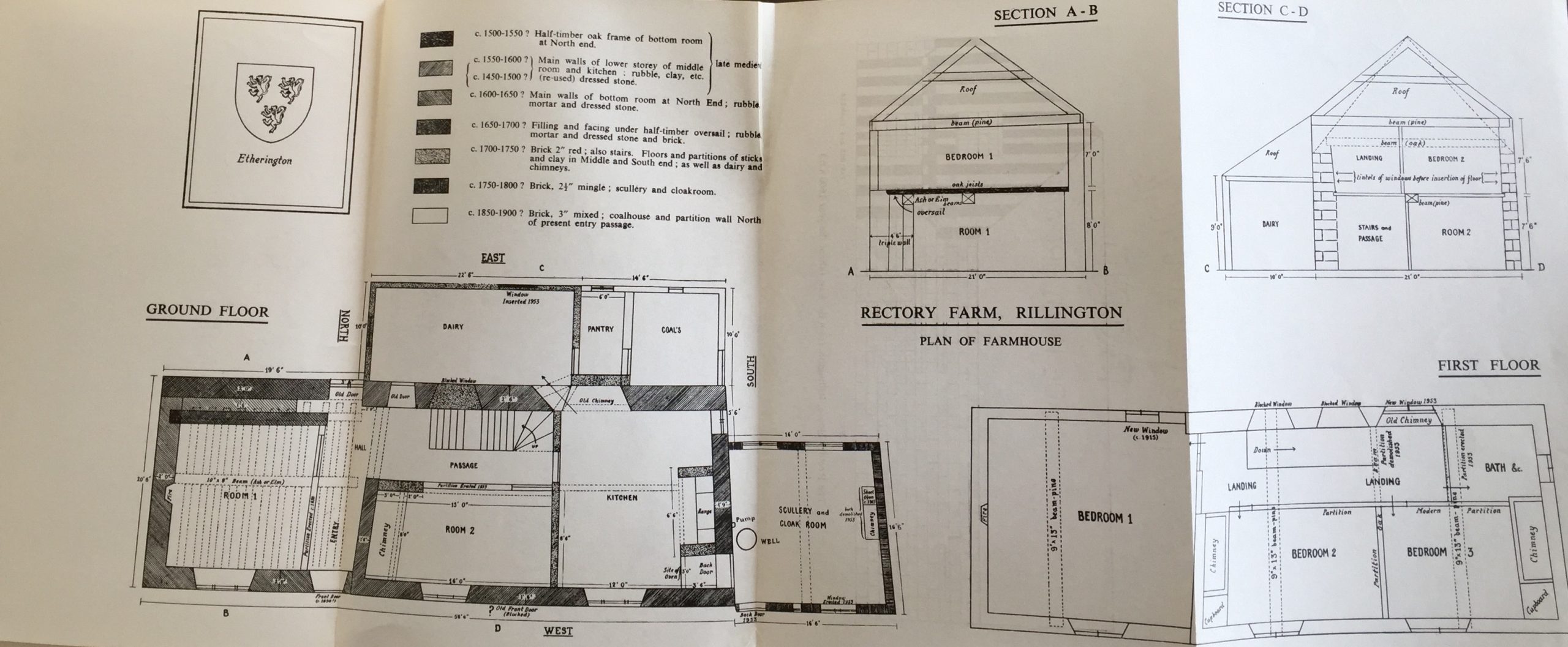
Alongside the plans was a note from Hudleston stating that Sir Richard Etherington “got, and his descendants kept, the Rectory of Rillington from 1589–1670.” Suddenly, what appeared to be an ordinary farmhouse became something much more interesting.
Who was Sir Richard Etherington?
The Etheringtons were a prominent Yorkshire family whose influence extended beyond Rillington. By the late sixteenth century they had acquired the Rectory and its associated lands, becoming part of the complex web of local landownership that shaped village life for generations.
Although many records from this period have been lost or survive only in fragments, a glimpse of the family’s status appears in the Hearth Tax returns of the seventeenth century. These records were introduced after the restoration of Charles II and assessed households according to the number of hearths they possessed.
Most houses in Rillington contained only one or two hearths. The Etherington property, however, was recorded with nine.
Nine hearths represented a substantial house by village standards and suggests a level of wealth and comfort enjoyed by very few of their neighbours. If this was indeed Rectory Farm, it would have stood out as one of the principal residences in the parish.
The story also reveals how closely local history is tied to wider national events. Rectory Farm was originally associated with lands belonging to Byland Abbey. Following the Dissolution of the Monasteries under Henry VIII, church lands passed into private ownership, creating opportunities for families such as the Etheringtons to acquire former ecclesiastical estates.
Today, little on the surface immediately reveals this history. The passing centuries have altered the building and the surrounding landscape. Yet the clues remain: old plans, heraldic devices, tax records and estate papers, each contributing a fragment of the story.
As historians, we rarely find a single document that answers every question. Instead, we assemble evidence piece by piece until a picture begins to emerge.
So did a knight live at Rectory Farm?
The surviving records suggest that the answer may well be yes.
And that possibility adds another fascinating chapter to the story of one of Rillington’s oldest surviving houses.