
Thomas Binks
Reconstructing the Life of an Ordinary Agricultural Labourer
Agricultural labourers are among the hardest people to recover from the historical record. They rarely left diaries or letters, few owned substantial property, and many appear only fleetingly in the documents that survive. Studying one parish offers a different way of approaching their lives.
By bringing together records created for entirely different purposes over many decades, it becomes possible to reconstruct the lives of people who might otherwise remain almost invisible.
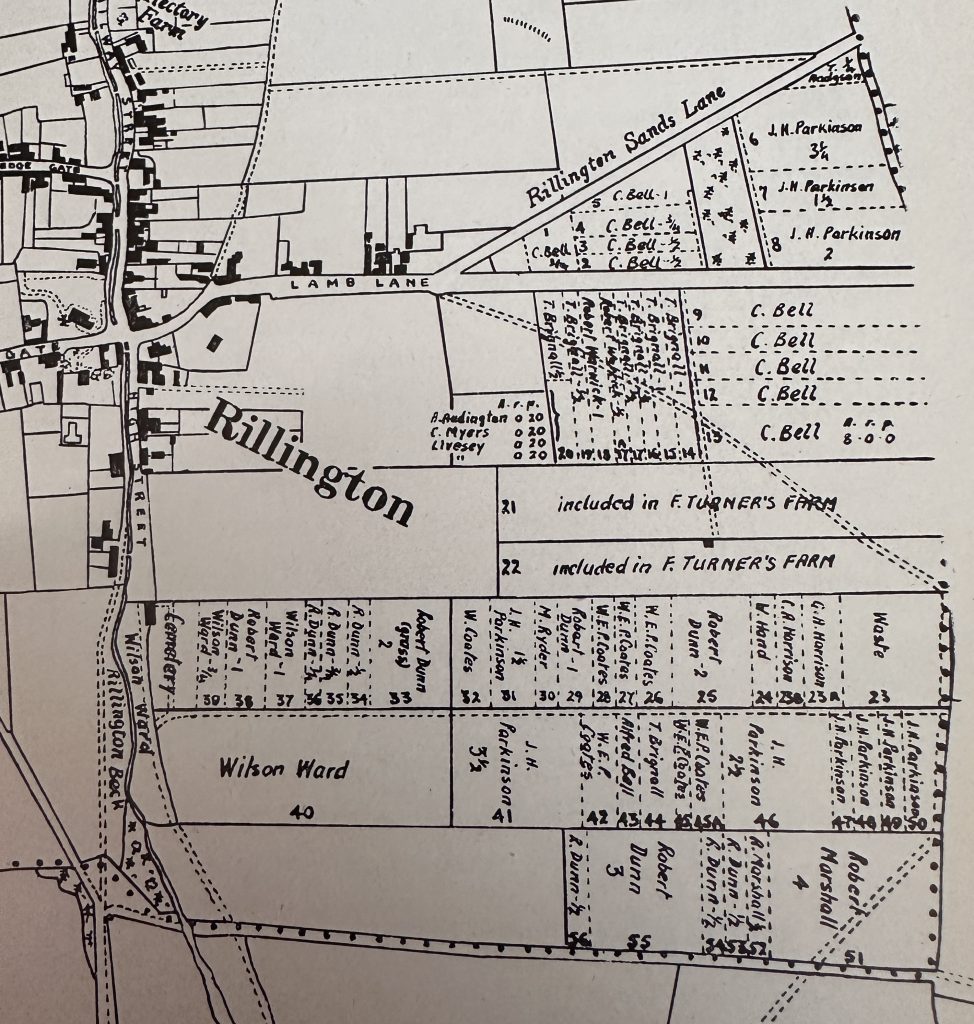
I first met Thomas Binks in a jury book. It was January 1840 and the entry was almost mundane. A neighbouring occupier had failed to keep livestock from straying into Thomas’ land at the Sands, destroying his crop of turnips. A local jury inspected the damage and awarded Thomas compensation of seventeen shillings and sixpence. As I continued my research, I found myself privately referring to him as ‘Turnip Thomas’. The nickname was simply a reminder of the record that first introduced me to his story
At that point he was simply a name on a page. Who was Thomas Binks? That simple question led me on an unexpected journey through parish records, manorial rentals, valuation lists, Overseers’ accounts, the East Riding Registry of Deeds, census returns and parish registers. Taken individually, these records reveal very little. Read together, however, they begin to tell the story of one ordinary agricultural labourer whose life would have otherwise been forgotten.
Before I could understand Thomas, I needed to understand the village that shaped him. In 1811, Rillington was home to just 561 people living in 100 inhabited houses. Of the 121 families in the parish, 107 depended upon agriculture for their livelihood. This was a close-knit rural community where people lived and worked side by side, and where the same names appear repeatedly in estate records, parish administration and local government.
Thomas was not exceptional. He was one of many agricultural labouring families whose livelihoods depended on the land. Yet, by following his story through the surviving records, it becomes possible to glimpse the experiences shared by countless others whose names have long since been forgotten.
The first surprise came in the manorial rentals. Rather than appearing simply as an agricultural labourer, Thomas was recorded as the occupier of small parcels of land on the Simpson estate, paying an annual rent of £3 2s 6d. Like many labouring households, he supplemented his wages through access to a few acres that helped support his family.
He was neither a substantial farmer nor a landless labourer. Instead, he occupied that fragile middle ground where independence depended upon good health, regular employment and a successful harvest. Like so many agricultural labourers, Thomas’ story was also a family story. His marriage to Jane Hicks at Wharram Percy on 17 August 1799 marked the beginning of a partnership that would see them raise seven children. His birthplace remains unknown, reminding us that even after following Thomas through so many records, some questions remain unanswered. Those gaps are part of the reality of historical research, but they do not diminish the picture that gradually emerges of a husband, father and working man determined to support his family.
The township valuation compiled for poor-rate purposes in 1813 revealed a little more. Thomas was assessed at £8. That figure meant little on its own, but when read alongside the entire valuation it placed him among Rillington’s smaller independent occupiers. Above him stood the principal landowners and substantial farmers; below him were cottages and much smaller holdings. Once again, Thomas appeared neither prosperous nor destitute but balancing carefully between the two.
Then came the document I never expected to find. Among the memorials enrolled in the East Riding Registry of Deeds was a formal lease and release dated April 1813. It described Breckney Close, comprising approximately four acres, together with “that messuage tenement or dwelling house lately erected and built… by the said Thomas Binks.”
I remember reading that sentence several times. Here was one rural working man, not merely renting land but recorded in a formal legal transaction as the builder of his own dwelling house. The document transformed my understanding of him.
Whatever the financial arrangements behind the transaction, Thomas was investing labour, resources and ambition into establishing a home for his family. It challenged some of my own assumptions about what an agricultural labourer could achieve in the early nineteenth century.
The records also remind us how fragile that independence could be. The Overseers’ accounts show Thomas receiving parish relief in 1819. Four years later he appears contributing towards the parish rates.
Modern thinking often divides people neatly into those who paid and those who received. Rural life was rarely so straightforward. Illness, poor harvests or irregular employment could temporarily move a family from self-sufficiency to dependence before they recovered once again. Thomas’s story illustrates that reality perfectly.
By 1841 the census finds him living on Low Moorgate in the terrace known locally as Teapot Row. His household included his youngest daughter Amy and her two young sons, both born outside marriage. These closely packed cottages fostered strong communities, but they also created an environment where private lives were rarely private. Villages had long memories, and neighbours knew one another’s business.
The jury book that first introduced me to Thomas also confirms that he was still cultivating land at the Sands in 1840. Even in later life he continued to work the smallholding that had helped sustain his family for decades.
His final years were more difficult. Following declining health, Thomas entered the Rillington poorhouse before being transferred to the Malton Union workhouse infirmary, where he died in January 1845. Two days later he was brought home to Rillington for burial in the churchyard of St Andrew’s.
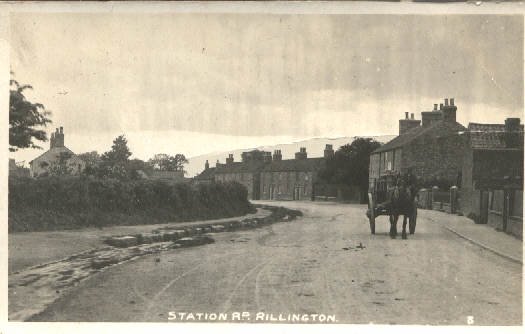
His life had begun in a world of horse-drawn transport, open fields and parish welfare. He died as the railway arrived at Rillington and as the old systems that had shaped his working life were beginning to give way to something entirely new.
Looking back, I find it remarkable that Thomas left no diary, no letters and no portrait. Had it not been for a chance entry in a jury book, I might never have looked for him at all. One question led naturally to another. The jury book directed me to the manorial rentals; the rentals led to the township valuation; the valuation to the Overseers’ accounts; and from there to the Registry of Deeds, the census, parish registers and, eventually, the poorhouse records.
Each document contributed only a fragment, but, taken together they reconstructed the life of a man who had almost disappeared from history.
Thomas Binks reminds us that agricultural labourers were not a uniform group. He was a labourer, a tenant, a cultivator, a ratepayer, a recipient of parish relief, a builder of a dwelling house, a husband, father and a grandfather. His life moved between independence and vulnerability, shaped by work, family, health and circumstance.
Thomas Binks was neither famous nor expecting to be remembered. Yet his story shows what a One-Place Study can achieve. By connecting records created for land management, parish administration, poor relief and legal purposes, we can recover the lives of village labourers whose work helped shape their communities. For me, this is what #OnePlaceLabourers is all about: not simply recording occupations, but understanding people.