
Rev. George Sykes
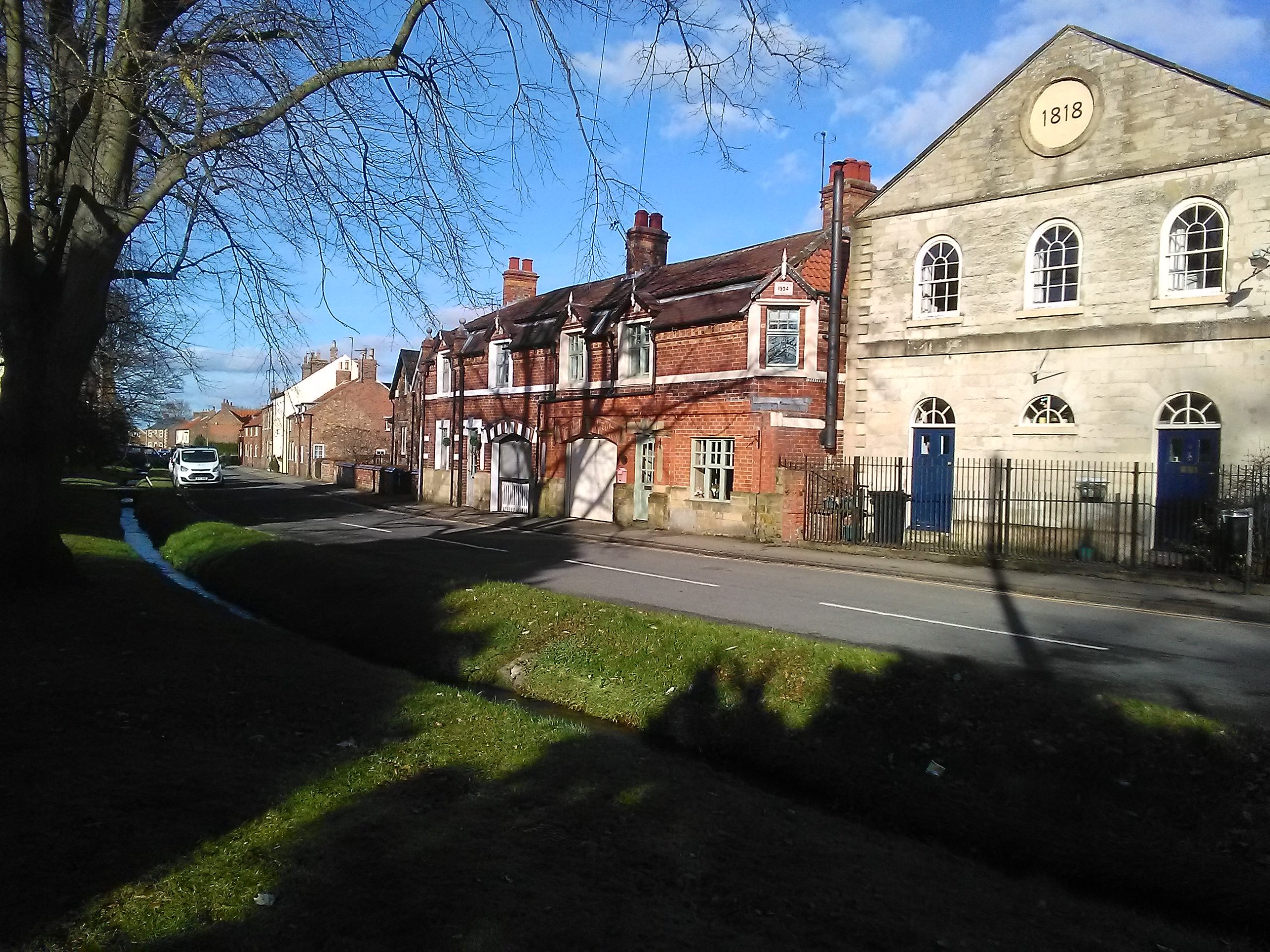
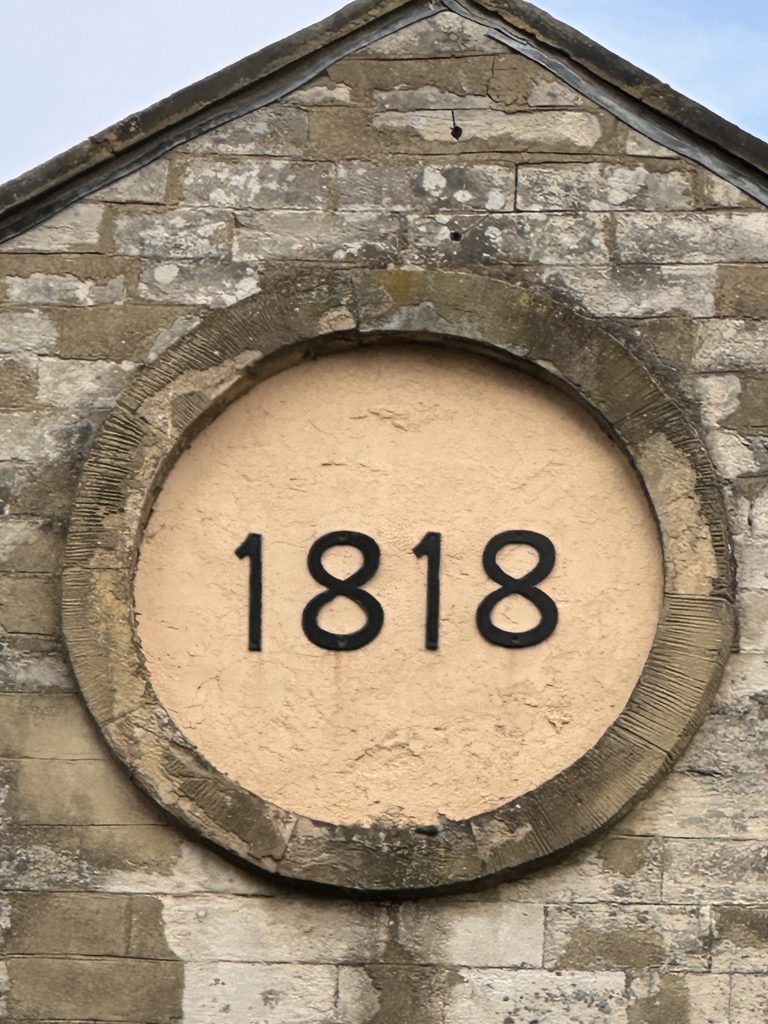
Today Bethesda Chapel stands quietly on Low Moorgate, its datestone recording the year 1818. It is now a private residence, but two centuries ago this substantial stone building was at the centre of a growing Independent congregation in Rillington.
Its history is about much more than a building. An extraordinary little book published in Malton in 1827 allows us to meet some of the people who established the congregation and, unusually, to glimpse the difficulties behind the chapel door.
More than one way to worship
By the nineteenth century, Rillington supported several different forms of Christian worship. St Andrew’s was the ancient Anglican parish church, but Nonconformity had become firmly established in the village. A Wesleyan Methodist chapel was built in 1805, Bethesda Independent Chapel followed in 1818 and a Primitive Methodist chapel opened in 1832.
The Independent congregation which eventually worshipped at Bethesda began before the chapel was built. According to William Greenwood’s Memoir of the Life, Ministry, and Correspondence of the Late Rev. George Sykes of Rillington, Independent preaching was introduced into Rillington on 24 July 1815. Services were initially held in the house of a Mr Jackson. As numbers increased, a barn was fitted out for worship, principally at the expense of Thomas and John Lamb. These names matter. They begin to turn the history of Nonconformity in Rillington from a history of chapels into a history of people.
Enter George Sykes
George Sykes was already an experienced preacher. For nearly thirty years he had been associated with Wesleyan Methodism, but by 1818 he had decided to leave the Wesleyan Methodist Connexion. It was a momentous decision for him.
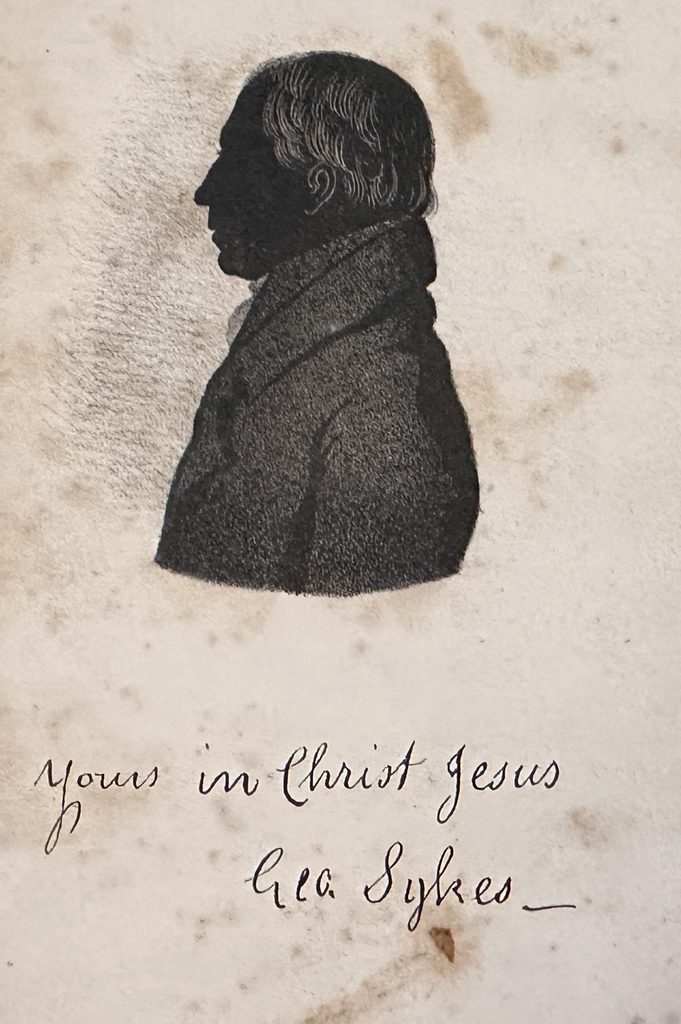
Sykes’s friend and eventual biographer, William Greenwood, was careful when describing the circumstances of his departure. There had clearly been hurt surrounding his secession and Greenwood deliberately avoided reopening old wounds. Whatever the precise circumstances, Sykes’s change of religious allegiance was not financially advantageous. His income as pastor of the Independent Church was considerably less than he had previously received.
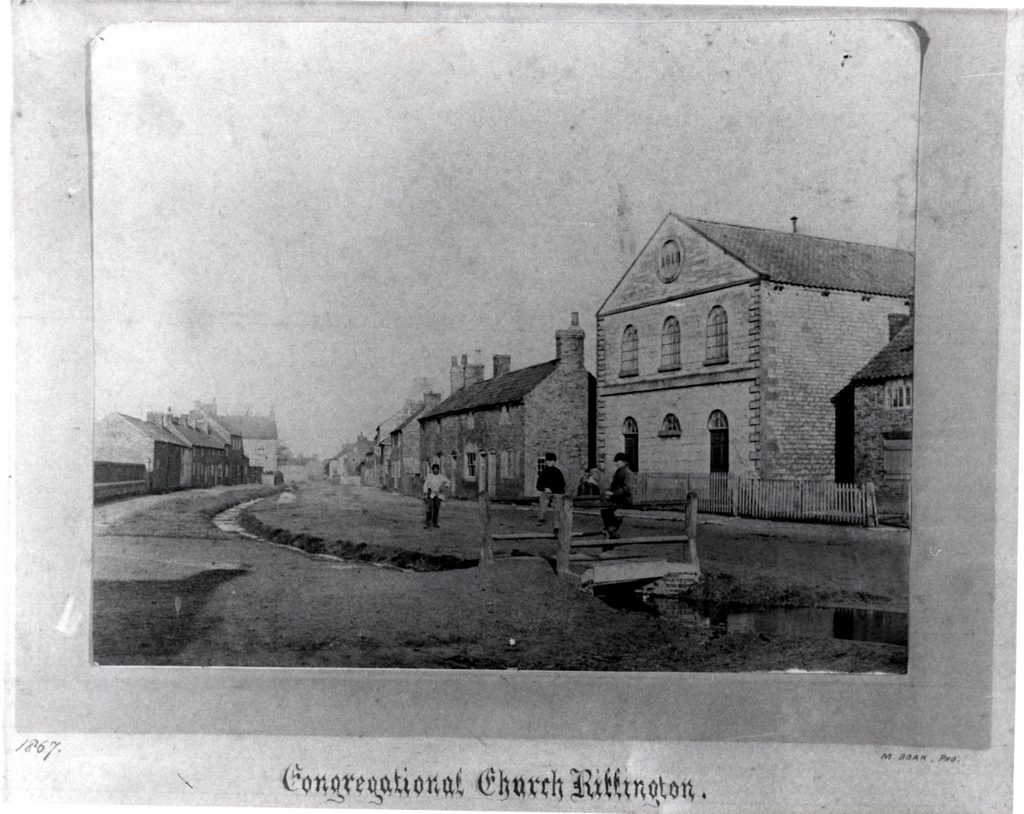
Meanwhile, the Rillington Independents were building. On 24 February 1818, the first stone of their new chapel was laid. That summer, while Sykes was attending the Methodist Conference at Leeds, two men from Rillington, Matthew Spanton and Thomas Smailes, approached him and invited him to preach in the village. Sykes came to Rillington in August and received a unanimous invitation to become minister. He arrived to begin his settled ministry on 31 October 1818. On 29 January 1819, nine people were enrolled as members and formally constituted themselves into an Independent Church. Sykes was formally set apart as their pastor on 1 June.
It is an important distinction. George Sykes did not arrive in Rillington and found Bethesda. A small group of villagers had already begun meeting, fitted out a barn and committed themselves to building a chapel. They then went looking for a minister.
The price of a chapel
Building Bethesda required more than religious enthusiasm; it required money. By 1820 the chapel was carrying a considerable debt. Sykes believed that the financial affairs of the chapel should properly have been dealt with by its deacons or other officers rather than its minister, but nevertheless agreed to help.
So the minister of Rillington went fundraising. His travels took him well beyond the village, including to London, where he went from place to place soliciting subscriptions towards the chapel debt. He disliked the work intensely.
One encounter recorded by Greenwood is particularly memorable. Sykes entered the premises of a bacon factor and, seeing the produce around him, began talking about Yorkshire. He eventually explained that he was collecting money for a small chapel built at Rillington, near Malton. His approach worked and the businessman gave him a guinea but apparently had no desire for public recognition of his generosity. Behind the rather amusing story was a serious problem. Even after Sykes’s efforts, more than £300 remained owing.
In December 1822 he set out fundraising again. This time nearly £360 was collected, together with books and other items for the chapel. The imposing building on Low Moorgate had come at a price.
A family in Malton
By this time Sykes’s domestic life had changed too. On 22 July 1822 he moved his family from Rillington to Malton. The memoir suggests that the move was intended to benefit his family and was not initially regarded as permanent. Sykes continued his connection with the Rillington congregation, but his home and his ministry were now in different places.
His daughter Margaret was already seriously ill. When Sykes left on his fundraising journey in December 1822, he feared that he might never see her again and he was right.
Margaret Sykes died on 31 January 1823, aged only eighteen. A newspaper death notice described her as the only daughter of the Rev. George Sykes of Rillington, but the burial register adds another piece to the story. The family was then living in Wheelgate, Malton. Margaret was buried at St Leonard’s, New Malton, on 4 February.
Then came another devastating loss. Only eleven days after Margaret’s burial, George’s wife Mary Sykes, aged 55, was buried at St Leonard’s on 15 February. Within a matter of days, George Sykes had lost both his wife and his only daughter.
Trouble at Bethesda
The memoir subsequently refers to the distress caused by death in Sykes’s family, but another problem was developing. There were serious disagreements between Sykes and some of the leading members of his Rillington church.
Greenwood does not give us an impartial account and we need to remember that he was writing about a friend. Nevertheless, the strength of his language suggests that this was no minor disagreement. Sykes apparently felt deeply injured by what had happened.
In about 1824 another difficulty arose when Sykes became involved in what Greenwood described as a “speculation of a worldly nature” which was the construction of a large house. Some of his friends believed that supervising the project occupied more of his attention than was compatible with his ministry.
We should be cautious about taking sides nearly two centuries later. We hear the story largely through Sykes’s sympathetic biographer and do not have the voices of the Rillington members who disagreed with him.
But that is precisely what makes the account so valuable. Congregations were communities of people. They raised money, made decisions, disagreed about responsibilities and sometimes fell out and Bethesda was no exception.
Finding the congregation
The names in Sykes’s memoir provide a way into the congregation itself. One of the men who approached him at Leeds in 1818 was Matthew Spanton. Parish and Nonconformist records allow us to follow Matthew and his wife Susannah through their children’s baptisms. Their earlier children appear in Anglican registers. Elizabeth Moorson Spanton was baptised at Rillington in 1809, Sarah in 1813 and Fanny in 1816.
Then something changes.
Mary Spanton, born in 1819, Hannah in 1821 and Jane in 1824 appear in the register of the Independent congregation at Rillington. Their baptisms were conducted by George Sykes himself.
The records therefore capture religious change within one family. They also warn against dividing villagers too neatly into “Anglican” and “Nonconformist”. People’s lives crossed denominational boundaries.
Matthew himself appears variously as a bricklayer, mason, maltster and brewer. He was not an abstract name in a chapel history. He was a working man living and raising his family in Rillington who became involved in establishing a new religious community.
The doctor becomes a deacon
By the time of the Religious Census of 1851, George Sykes was long dead, but Bethesda was still very much alive.
The return for the Independent chapel was completed by Thomas Allanson, deacon. This was perhaps Dr Thomas Allanson, Rillington’s long-serving doctor, parish medical officer and public vaccinator, a man who appears repeatedly in the records of nineteenth-century village life.
His position at Bethesda is particularly interesting because other aspects of his life were closely connected with St Andrew’s. His family life events appear in Anglican registers, he was involved with the extension of the Anglican churchyard and he was eventually buried there. Yet in 1851, he was maybe serving as a deacon of the Independent chapel.
Again, religious identity in a rural community was not necessarily as tidy as denominational labels might suggest.
The Ecclesiastical Census also gives us some idea of Bethesda as a functioning place of worship rather than simply a building. On census Sunday there were 50 worshippers at the morning service and 100 in the evening. Sunday scholars were also recorded.
Alongside Bethesda stood Rillington’s Wesleyan and Primitive Methodist chapels and the parish church of St Andrew. For a relatively small rural community, there were several different ways to worship.
George’s final years
Sykes continued to be identified with Rillington even after moving to Malton. His will, made shortly before his death, described him as late of Rillington but then of New Malton and shows that he still owned two houses with land in Rillington.
The will also fills out his family. He left property to his daughter Mary Malim, wife of George Malim of Boroughbridge, with provision eventually for his grandson Godfrey Sykes, son of his son George.
George Sykes died in 1826 and was buried at St Leonard’s, New Malton. By then he was living in Malton, although the connection with the village where he had ministered remained part of his identity.
The following year William Greenwood published his memoir. Almost two hundred years later, an original copy survives. Its pages do something that the datestone on Bethesda cannot. They take us inside the congregation.
We see villagers meeting first in a house and then a barn. We see Thomas and John Lamb helping to provide a place for worship. Matthew Spanton and Thomas Smailes travel to Leeds in search of a minister. We follow George Sykes around the country trying to raise money for a chapel in Rillington. We see his family leave the village, his terrible bereavements and, eventually, the disagreements within the congregation he had served.
The history of Nonconformity in Rillington is therefore not simply the history of three chapels. It is the history of people choosing how they wanted to worship and then creating the communities, buildings and relationships that allowed them to do so. And sometimes those relationships were complicated.
Sources: William Greenwood, Memoir of the Life, Ministry, and Correspondence of the Late Rev. George Sykes of Rillington (Malton: G. Barnby, 1827); 1851 Home Office Ecclesiastical Census Returns Ref: The National Archives, HO 129/526Rillington and New Malton parish registers; George Sykes’s will Ref: The National Archives, PROB 11/1712/380; contemporary newspapers; Baines’s History, Directory & Gazetteer of Yorkshire (1823); Rillington Independent Congregation registers Ref: North Yorkshire County Record Office, R/1/YCU