
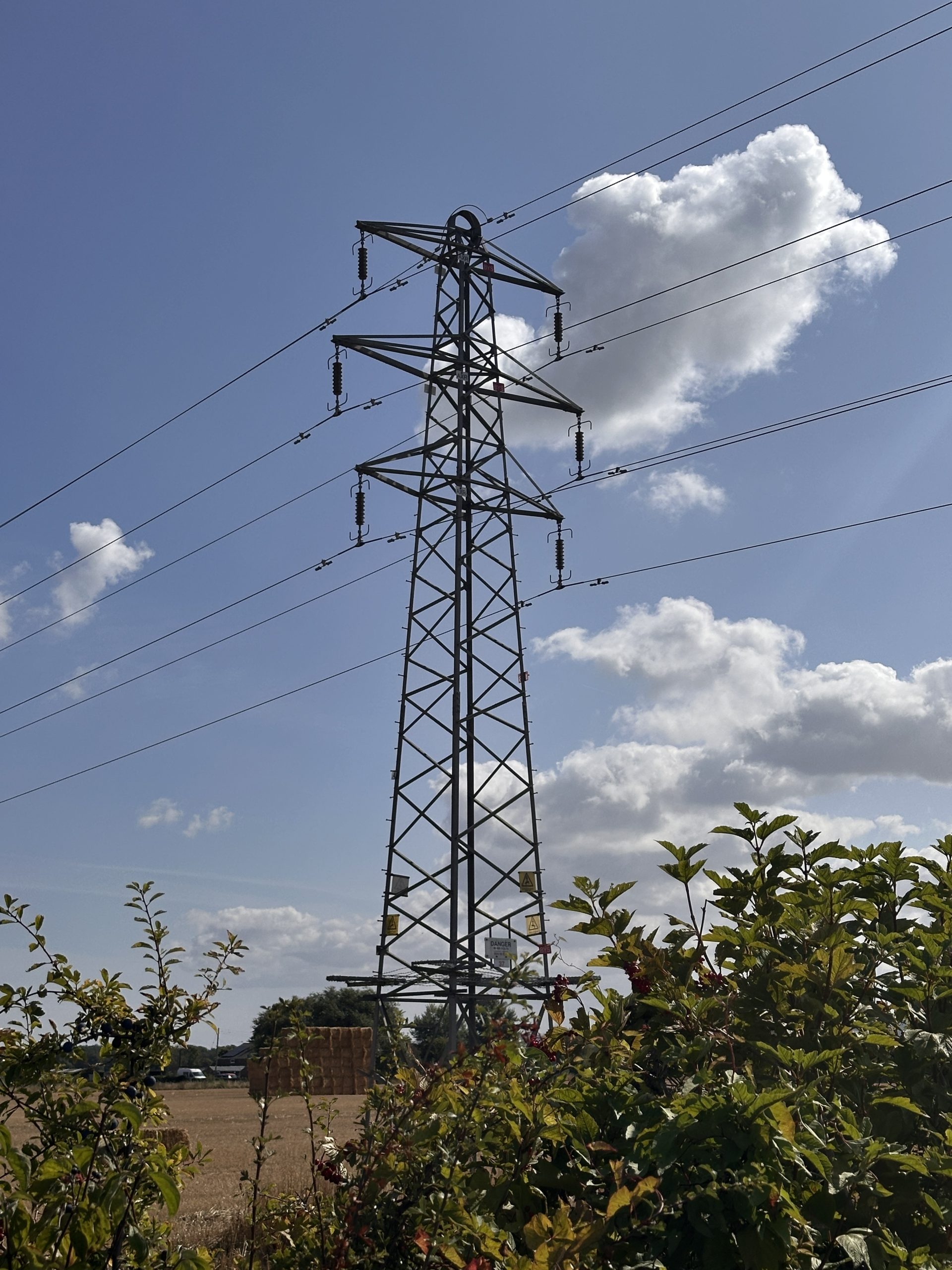
When Did the Lights Come On in Rillington?
Exactly when electricity first reached Rillington has proved surprisingly difficult to establish. We know that it was available in parts of the village by the 1930s, but the evidence suggests that the change from lamps and candles to electric light was a gradual process rather than an event that can be marked by a single date.
I began looking into the subject after Chris Moorby generously shared his research into Rillington’s electricity supply. His work led me first to the development of the electricity supply in nearby Malton and then, inevitably, back to the newspapers to discover what could be found about Rillington itself.
Electricity reaches Malton
The Northern Counties Electricity Supply Company was formed in 1900 and obtained authority to supply a number of towns in the north-east of England, including Malton. The Malton supply began on 24 October 1905, with electricity generated locally by two Crossley 120 horsepower gas engines, belt-coupled to Bruce Peebles dynamos. Distribution was initially by direct current at 460/230 volts, later increased to 480/240 volts.
This establishes what was happening only about five miles from Rillington, but it does not tell us when the wires reached the village. For that, we have to look elsewhere.
Electricity comes to Rillington
The surviving newspaper evidence begins to provide some clues. By the 1930s electricity was certainly present in Rillington, although it had not necessarily reached every part of the parish.
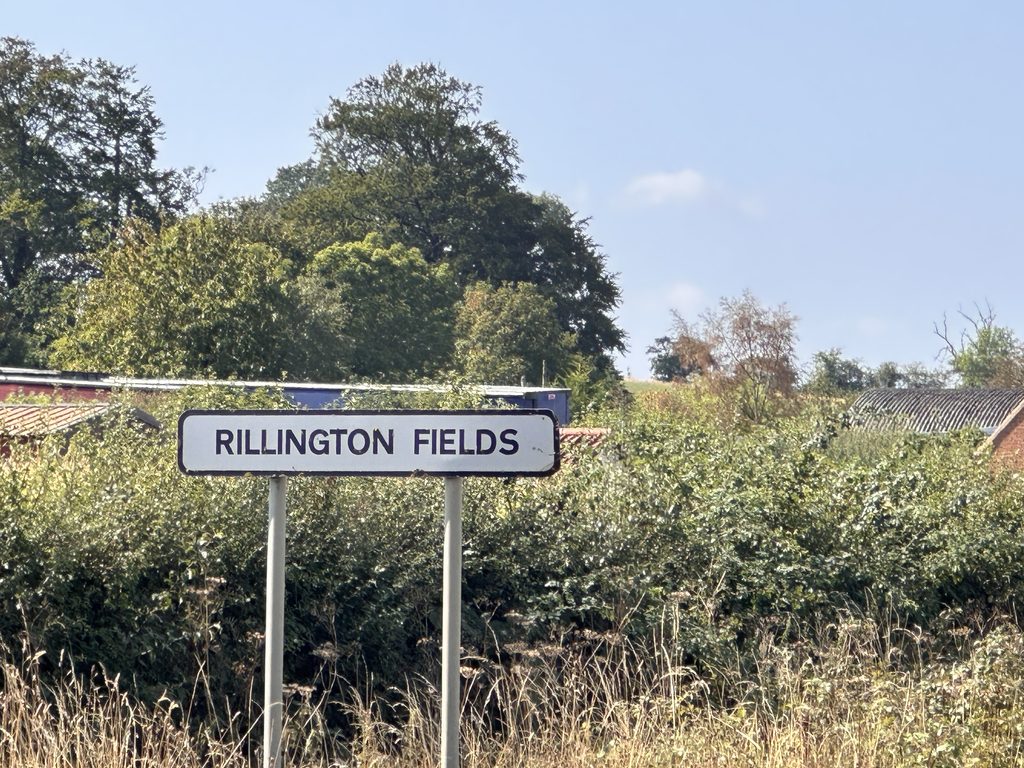
In September 1937, the Hull and East Yorkshire Times reported a meeting of Rillington Parish Council at which the electricity supply was discussed. Electric light was already in use at the council school, but the clerk was instructed to approach the North Eastern Electricity Supply Company about extending the installation to the Rillington Fields district.
This brief report is particularly useful because it shows that electrification was still progressing through the parish. Rather than the whole of Rillington receiving electricity at once, individual buildings and areas appear to have been connected as the network was extended. People living in the more outlying parts of the parish could therefore still be waiting for electricity when others nearby were already using it.
From novelty to selling point
Once electricity became available, its presence was worth advertising. A later sale notice for Park View in Railway Street specifically included “Electricity and Mains Water” among the property’s features.
Today those words would hardly merit inclusion in a property description, but at the time they told a prospective purchaser something important about the house. They also provide useful evidence that two services we now take entirely for granted had become part of domestic life in Rillington. Mains water, however, is another story and deserves an investigation of its own.
An unusual electrical legacy
Chris’s research has uncovered another intriguing piece of evidence. The Electrical Times Electricity Supply Handbook for 1959 records Rillington as receiving a 240/480-volt alternating-current supply. This differed from the three-phase 415/240-volt system that had become the national standard.
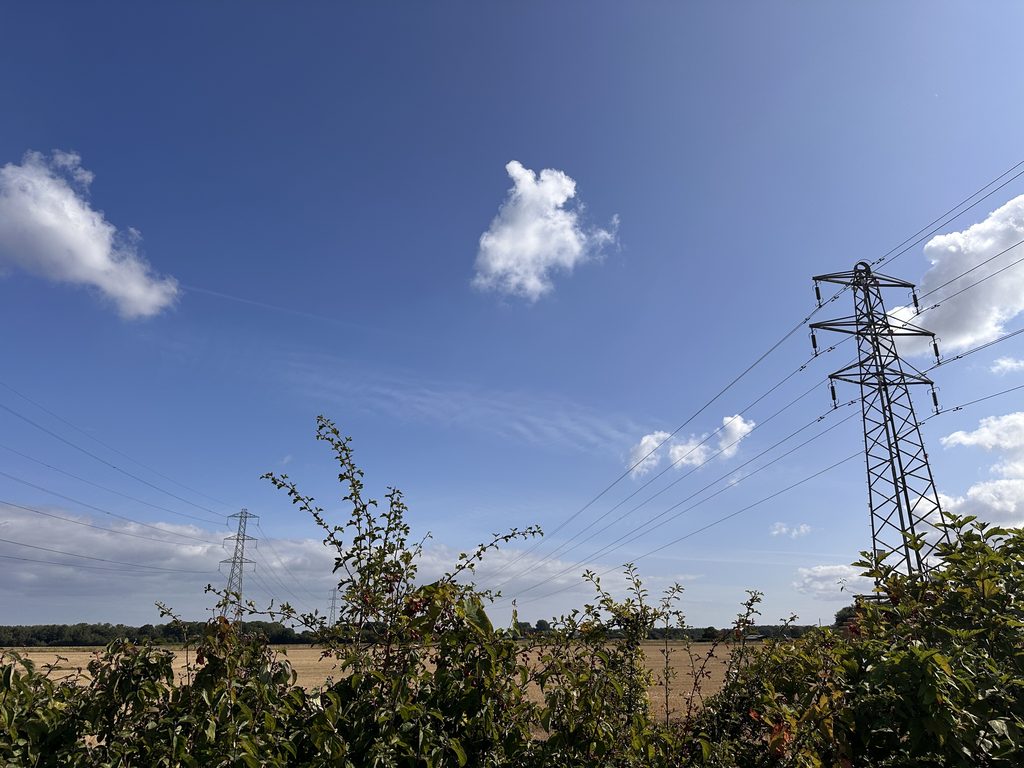
The wider electricity network had changed considerably by then. The Electricity (Supply) Act 1926 created the Central Electricity Board and led to the development of an interconnected national grid. In 1932 the Northern Counties undertaking was absorbed into the reorganised North-Eastern Electric Supply Company, which took its Malton supply from a Central Electricity Board grid substation and closed the old generating plant. Following nationalisation in 1948, the area came under the North Eastern Electricity Board.
Chris suggests that Rillington’s 480/240-volt alternating-current supply may have developed from an earlier direct-current system which was subsequently converted to alternating current, rather than having been installed from the outset as part of the later three-phase grid system. If so, the voltage still being recorded in 1959 may preserve a small technological trace of an earlier stage in Rillington’s electrification. At present, however, I have not found the evidence that would establish when that original supply reached the village.
So when did the lights come on?
For the moment, there is no single date. What the evidence reveals instead is a process. Electricity was being generated in Malton from 1905; by the 1930s it had reached at least part of Rillington; and in 1937 the Parish Council was still seeking an extension of the supply to Rillington Fields.
There may yet be a surviving company, local authority or parish record which identifies when the first Rillington properties were connected. There may also be memories within local families of houses and farms receiving electricity, or of oil lamps continuing to be used in the more outlying parts of the parish.
Until more evidence emerges, these scattered fragments allow us to see a change which has now become almost invisible: electricity gradually making its way through the parish and, house by house, the lights coming on.
Acknowledgement: My thanks to Chris Moorby for generously sharing his research into the history and technical development of Rillington’s electricity supply.