
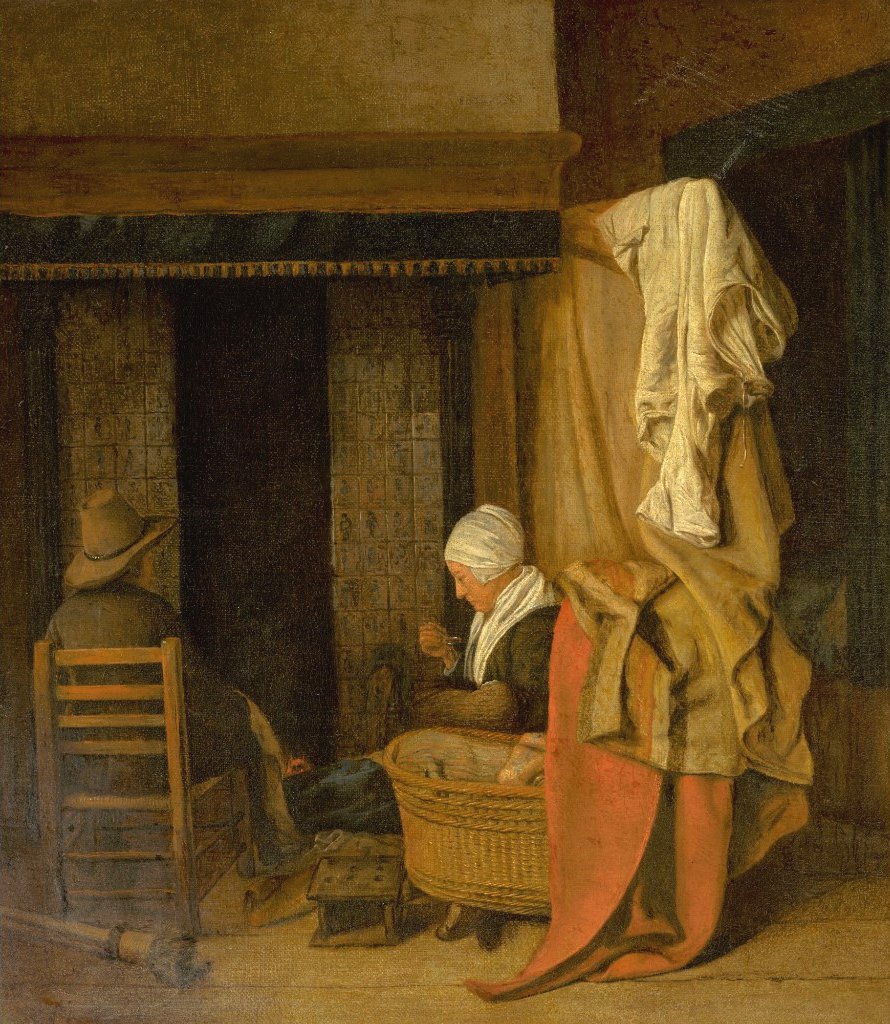
Keeping the Home Fires Burning: Rillington’s Hearth Tax
How many fireplaces are there in your house? One? Two? Perhaps none at all?
It might seem an odd question today, but in seventeenth-century England, the answer could determine how much tax you paid.
And thanks to the records left behind, we can discover something about the households of Rillington and Scampston more than 350 years ago. Some of the surnames might even be familiar.
A tax on warmth?
In 1662, during the reign of Charles II, the government introduced the Hearth Tax, also known as Chimney Tax or Chimney Money, to raise revenue for the Crown. Householders were generally required to pay two shillings annually for each hearth or fireplace, payable in two half-yearly instalments. One shilling was collected at Michaelmas (29 September) and the other at Lady Day (25 March).
The principle was relatively straightforward. A house with several fireplaces was likely to be larger, and its occupants potentially better able to pay, than a modest dwelling with a single hearth.
The tax was unpopular, not least because counting fireplaces could involve officials entering people’s homes. Certain poorer households qualified for exemption, although the rules were more complicated than simply having a low income. The tax was abolished in England and Wales in 1689.
Fortunately for local historians, the surviving returns provide something rather more interesting than a record of taxation. They give us the names of householders living in communities long before the detailed nineteenth-century censuses.
Rillington in 1672–1673
The Hearth Tax return for Rillington, recorded as Rullington, names householders alongside the number of hearths attributed to their properties.
At one end of the scale stood Mr Etherington, with nine hearths, and Mr William Wheath, with six. Abraham Meede had four, while several other householders had two. But such households were the exception.
Most of the properties recorded had just one hearth. In these homes, the fireplace was likely to have served several purposes, providing warmth, cooking facilities and a gathering place for the household.
It is tempting to interpret the number of hearths as a measure of wealth, but we should be cautious. A large property did not necessarily indicate financial prosperity, and a single hearth did not automatically mean poverty.
Nevertheless, the return reveals considerable differences in domestic accommodation within a relatively small village.
Do you recognise a name?
Here are the householders recorded in Rillington’s Hearth Tax return of 1672–1673. I’ve retained the spellings and abbreviations from the published transcription, so you may find familiar surnames in unfamiliar forms.
Rillington: householders assessed
Householder | Hearths |
|---|---|
| Mr Wm Wheath | 6 |
| Ann: Hodgson | 1 |
| widd Etherington | 1 |
| Mr Etherington | 9 |
| Tho: Clarke | 1 |
| Rich: Hall | 1 |
| Jam: Petch | 1 |
| Ed: Harrison | 1 |
| Pett Smith | 1 |
| Rich Milner | 1 |
| Jon: Spencer | 2 |
| Tho: Hall | 2 |
| Rich Bealby | 1 |
| Jon: Blackburne | 2 |
| widd Lambe | 1 |
| Pett Watson | 1 |
| Tho: Wilbaunk | 1 |
| Jos: Stevenson | 1 |
| widd Bealby | 2 |
| Wm: Coverdaile | 1 |
| Jon: Harrison | 1 |
| widd Ashburne | 1 |
| Matw: Marshall | 1 |
| Jon: Coale Empt | 1 |
| Wm: Wilson | 1 |
| Wm: Hurd | 1 |
| Jam: Stork | 1 |
| Wm: Rullington | 1 |
| Wm: Coale Empt | 2 |
| Jam: Clifford | 1 |
| Wm: Hutchinson | 1 |
| Marke Stork | 1 |
| Tho: Coulson | 1 |
| Abrom: Meede | 4 |
| Jon: Hodgson | 1 |
| Robt: Ruston | 1 |
| Jon: Coale | 1 |
| Tho: Wright | 1 |
| widd Coale | 1 |
| Mr Gowland | 1 |
| Fran: Clarke | 1 |
| Wm: Harrison | 1 |
| Rich: Ashton | 1 |
| widd Docker | 1 |
| Jam: Smith | 1 |
| Wm: Dale | 1 |
| Arther Beverley | 1 |
| Ed: Anlaby | 2 |
| Total recorded | 70 |
Those who did not pay
Perhaps the most interesting entries are those recorded as legally discharged from the tax.
Exemption was not simply a matter of refusing to pay. Households had to meet particular legal conditions, and the records can therefore provide clues about people living in more modest circumstances.
The Rillington return includes fifteen legally discharged one-hearth households.
Rillington: discharged by legal certificate
| Householder | Hearths |
|---|---|
| Wm: Boweram | 1 |
| Jon: Meede | 1 |
| Robt: Hewison | 1 |
| Math: Eyon | 1 |
| Tomison Cooper | 1 |
| Tho: Sanderson | 1 |
| Robt: Watson | 1 |
| Wm: Bowerman | 1 |
| Wm: Dalshop | 1 |
| Tho: Parkin | 1 |
| Danll: Gray | 1 |
| Eliz: Banckes | 1 |
| Cisley Wilson | 1 |
| Jane Foster | 1 |
| Anne Peacock | 1 |
| Total | 15 |
These entries are especially valuable because they preserve the names of people who might otherwise have left little trace in surviving records.
The tax return was not a census in the modern sense. It generally identified householders rather than everyone living beneath the same roof. Wives, children, servants and other residents may therefore remain unnamed.
Can we find them again?
The next step is to turn to the parish registers.
Among those discharged from payment were Anne Peacock and Cisley Wilson. Burials under these names appear in the Rillington registers during the following decade. But finding a matching name does not necessarily establish that we have identified the same individual.
Without further evidence, we cannot safely reconstruct someone’s family circumstances from a single entry. This is one of the frustrations, and fascinations, of researching the seventeenth century. Sometimes the records allow us to glimpse a person for a moment, only for them to disappear again.
It is also why examining different sources together is so important. A tax return, parish register, will or property deed may each contribute a small piece of the story.
And across the parish at Scampston?
The return also records householders in Scampston, written as Scamston in the published transcription.
Here the picture is rather different. Almost every recorded householder had a single hearth, with John Lingstall assessed for two.
And then there is a rather surprising entry: Mr St Quintin: one hearth. Given the family’s prominence and association with Scampston Hall, we might reasonably have expected more. Surely a substantial household would have required fireplaces for cooking and heating several rooms?
Was this a smaller property occupied by a member of the family, rather than their principal residence? Were some fireplaces unused, blocked or otherwise excluded from assessment? Or does the entry reflect circumstances we have yet to uncover?
The return alone cannot answer those questions. Nor does it justify accusing Mr St Quintin of concealing fireplaces to avoid paying tax, however tempting the thought of a thrifty Yorkshire gentleman might be!
It is an excellent example of why tax records must be interpreted with care. A familiar name does not necessarily identify a particular house, and the number of taxable hearths cannot always be equated with the number of fireplaces a building possessed throughout its history.
Scampston: householders assessed
| Householder | Hearths |
|---|---|
| Hen: Massam | 1 |
| Rich: Smith | 1 |
| John Lingstall | 2 |
| Robt Stather | 1 |
| Wm Barker | 1 |
| Rich: Hurd | 1 |
| John Watson | 1 |
| Christo: Ripley | 1 |
| Robt Knowles | 1 |
| Mr St Quintin | 1 |
| John Weke | 1 |
| Wm Cook | 1 |
| Barth: Richardson | 1 |
| Mich Widd | 1 |
| Geo: Lowill | 1 |
| John Carr | 1 |
| John Seller | 1 |
| John Parkin | 1 |
| Tho: Pearkin | 1 |
| Rich Carr | 1 |
| Tho: Hambldon | 1 |
| … Reevely | 1 |
| … …oyes | 1 |
| … …ightingall | 1 |
| Tho: Herrington | 1 |
| Robt Petch | 1 |
| Tho: Coulson | 1 |
| Tho: Ford | 1 |
| John Sheldes | 1 |
| Mathew Braney | 1 |
| Low: Slater | 1 |
| Robt Knowles | 1 |
| John Watson | 1 |
| John Stevenson | 1 |
| Eliz Reevely | 1 |
| Chr Stevenson | 1 |
Scampston: discharged by certificate
| Householder | Hearths |
|---|---|
| Wm Dixon | 1 |
| John Milburne | 1 |
| Hen: Wharton | 1 |
| Joh… Moore | 1 |
| Steven Challinger | 1 |
| John Petch | 1 |
| Jane Stell | 1 |
| Eliz Eith | 1 |
| Wm Parkin | 1 |
| Ellin Spencer | 1 |
| Margt Curdikes | 1 |
| Total | 11 |
Source: Neave et al. (2015), pp. 137–138.
Both Rillington and Scampston therefore included householders who were assessed for payment and others who qualified for legal discharge.
The difference between the two communities is interesting, particularly the larger hearth assessments in Rillington. But the figures are a starting point for investigation, not a complete picture of living standards.
More than a list of names
The Hearth Tax was introduced to raise money for the Crown, not to provide future generations with a picture of village life. Yet that is precisely why its surviving returns are so valuable.
They allow us to look beyond the landowners, clergy and prominent families whose names appear so frequently in local histories, and begin to consider the wider community. Some people occupied substantial houses. Others had only one hearth, while some qualified for exemption from payment.
We may never discover very much about their individual lives. But their inclusion in the return matters. More than 350 years later, they remind us that Rillington and Scampston were home not merely to the families whose houses and memorials have survived, but to many others whose stories are much harder to recover.
And sometimes, a single hearth is where the search begins.
Sources
Neave, D., Neave, S., Ferguson, C. and Parkinson, E. (eds.) (2015) Yorkshire East Riding Hearth Tax 1672–3. British Record Society, pp. 137–138, 148–149.
The National Archives, E 179/205/504, East Riding Hearth Tax assessment, 1672.