
Behind the Chapel Door: Westgate’s Primitive Methodists
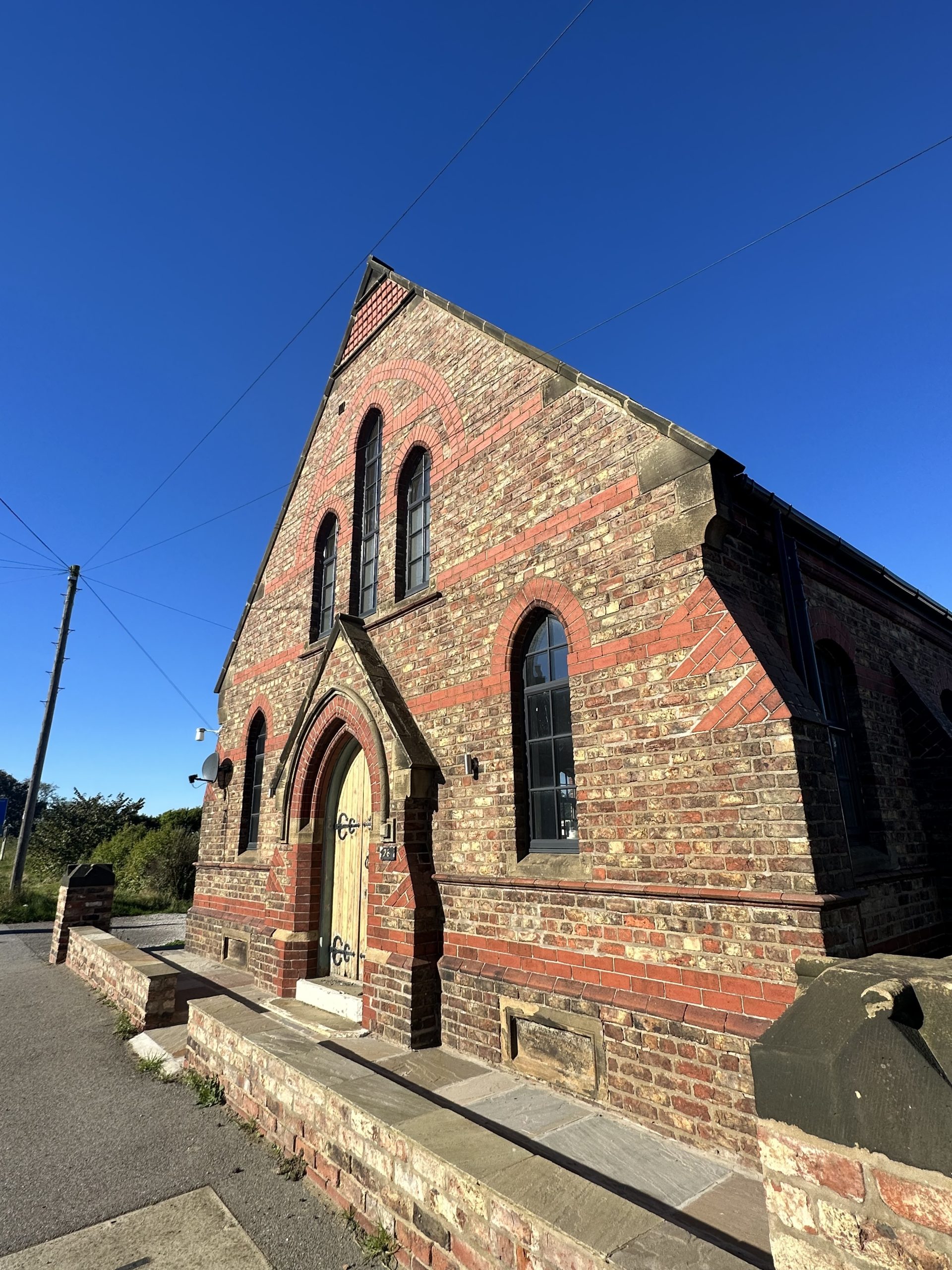
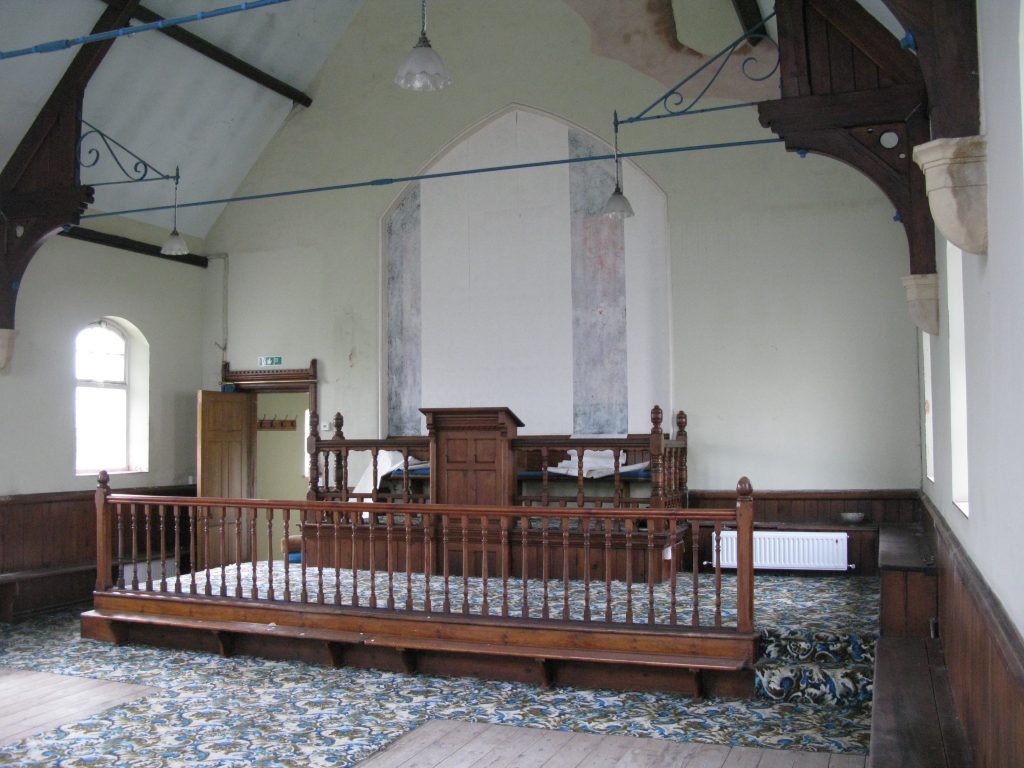
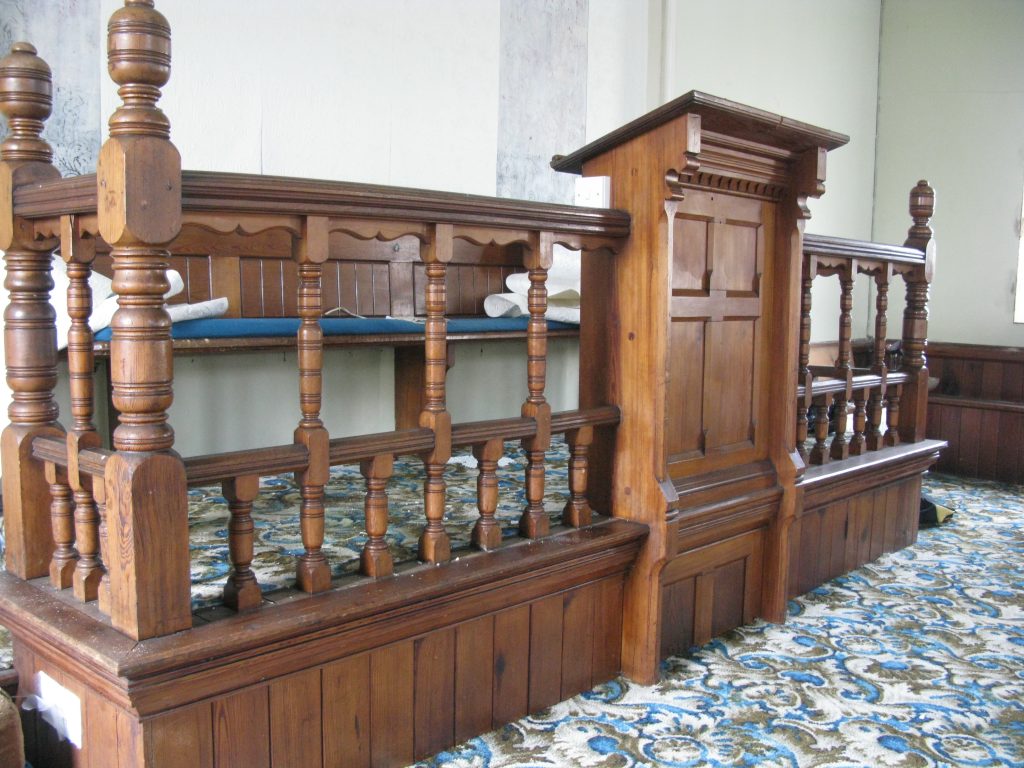
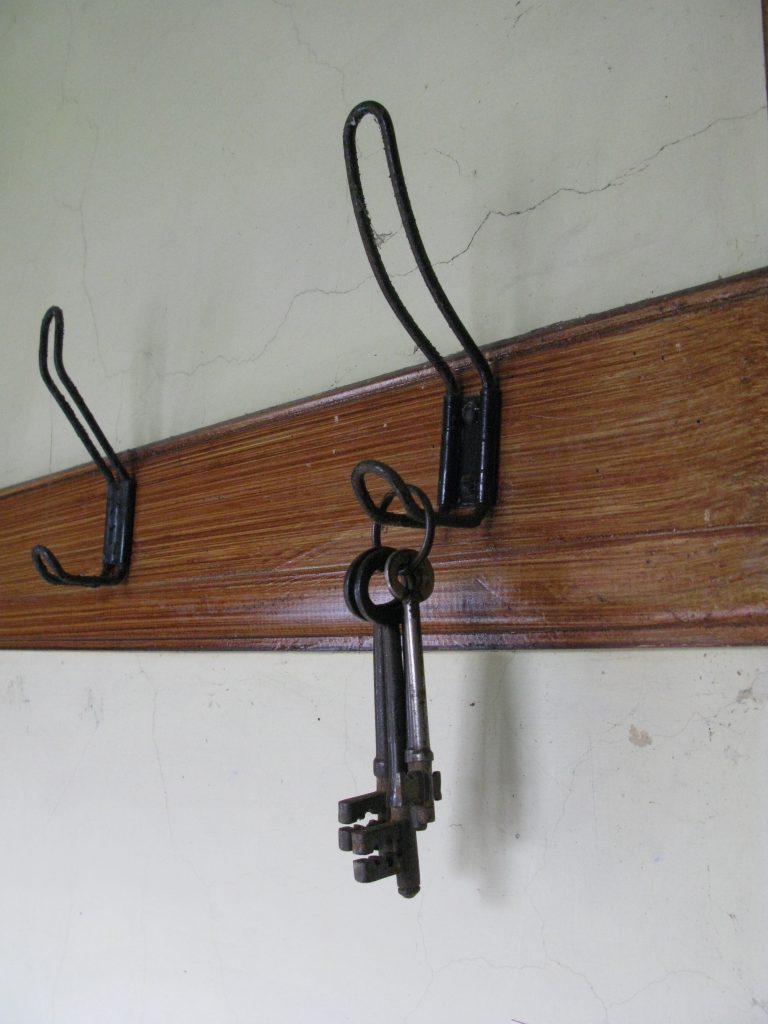
There is something rather handsome about Westgate chapel, especially when the sunlight catches its brickwork and tall windows. John Carlisle’s photographs, taken in 2017 when the building was no longer in use as a chapel, preserve its pulpit, communion rail, roof timbers, hanging lamps and hat pegs, where a bunch of substantial keys waits on a hook. These are the details that rarely trouble a minute book, but they bring us closer to the people who opened the building, organised the services and kept everything going.
Thanks to research kindly shared by Sue Goodwill, Methodist Administrator, and some newspaper discoveries, we can put names and activities alongside those photographs. Westgate’s story includes outdoor preaching, Sunday-school children, Christmas singers and a congregation repeatedly finding ways to pay the bills. Occasionally, someone also had something to say about the length of a sermon.
A chapel and its congregation
Primitive Methodism emerged in Staffordshire in 1811 under Hugh Bourne and William Clowes, drawing on the outdoor preaching and religious enthusiasm of early Methodism. Its name expressed a wish to return to those beginnings. Camp meetings brought people together outdoors for preaching, prayer and singing, while local congregations gave working people opportunities to preach, organise and lead. The movement found supporters among agricultural labourers as well as industrial workers, and women also served as preachers.
The 1851 religious census provides an early account of Rillington’s Primitive Methodist chapel. Unlike the population census, this return recorded places of worship, their accommodation and attendance. It states that the chapel was erected in 1832 and provided 78 free sittings and 50 other sittings, giving room for 128 people.
On the census Sunday, 46 people attended in the afternoon, alongside 30 Sunday scholars; the evening congregation numbered 50. No morning attendance was entered. These are attendances at separate services, so we cannot add them together to count individual worshippers: some people may have returned in the evening.
John Todd completed the return as an elder, describing his occupation as tailor and draper. His declaration gives us a named person taking responsibility for the figures, as well as a glimpse of the relationship between chapel life and the village’s working households.
The chapel also appears on the Ordnance Survey map surveyed in 1850-1851 and published in 1854, on Westgate near Collinson’s Lane. A Primitive Methodist preaching plan for the Malton Circuit in 1851 names George Horsman and Richard Vasey as missionary prayer leaders at Rillington. The congregation belonged to a network extending across the surrounding villages, supported by people whose religious work sat alongside their everyday occupations.
The history of the buildings is less straightforward. Alongside the 1832 foundation recorded in the census, later sources give 1876 as a chapel date. In June 1886, Rillington’s trustees received permission to apply to the District Committee to obtain land and build a new chapel, while later inspection reports date the surviving Westgate building to about 1890. These references need further investigation before they can be arranged into a firm account of rebuilding or replacement.
Out in the open
Chapel life extended beyond the building. In August 1875, the Scarborough Mercury reported Rillington’s annual Primitive Methodist camp meeting. Services took place at the “usual place”, which the reporter evidently expected readers to know. Unfortunately, they did not think to leave the rest of us an address. Fine weather brought a large attendance from neighbouring villages.
A rather livelier glimpse survives in the Yorkshire Gazette in September 1913. Drawing on the recollections of a former Primitive Methodist minister, the Rev. A. Hebblethwaite, the writer described a camp meeting at Rillington where the new preacher was waiting his turn. The preceding speaker was taking his time, much to the irritation of a man eager to hear the newcomer. Eventually, patience gave way and the speaker was told to sit down and let the lad speak.
The event was recalled years afterwards and is undated, but it offers a welcome reminder that even a religious gathering could have an impatient audience.
There was cooperation between congregations too. At the Primitive Methodists’ harvest thanksgiving in 1877, the Congregational choir supplied the singing under Mr Pattison’s leadership. John Todd chaired the meeting, with addresses from W. Ryder, F. Barker, W. Megginson and the Rev. G. Thorp. The proceeds amounted to 15s. 7d. Whether this was the same John Todd who completed the 1851 return remains to be established, but the familiar name is worth following.
Singing, stalls and a new schoolroom
Keeping a chapel going required regular fundraising. In January 1891, the Malton Messenger carried the Primitive Methodists’ thanks to people in Rillington and neighbouring villages who had contributed to their Christmas singers. The money would go to the chapel fund.
In 1911, two social gatherings described as “At Homes” were organised to support the Connexional Thanksgiving Fund. The ‘Connexion’ was the wider Primitive Methodist church, linking local congregations through its circuits and shared organisation, so this fundraising reached beyond Rillington. The first took place in the Council Schoolroom, lent and decorated for the occasion. There were songs, duets, humorous readings and stalls selling useful and fancy articles. J. G. Atkinson and J. G. Teasdale acted as joint secretaries. Behind the brief newspaper report lay the work of arranging a programme, preparing goods and persuading people to attend.
A new Sunday-school room brought another financial commitment. The trustees’ minutes, as summarised by Sue, mention people wishing to lay foundation stones in March 1923. Later building reports date the schoolroom to about 1925, and a newspaper account published in January 1926 confirms that it was in use by then.
That report describes a sale of work intended to reduce the Sunday-school debt. George Kitson of Thorpe Bassett opened proceedings, with stalls offering plain and fancy goods, jumble and produce. Tea was followed by entertainment in the schoolroom attached to the chapel, chaired by the circuit minister, the Rev. E. Evans. The event raised £13.
It was also an occasion to thank Mr and Mrs Teasdale and Miss E. Teasdale, who were leaving the district after supporting Primitive Methodism locally. The gifts included a silver-plated sugar basin and cream jug for the couple and a handbag for Miss Teasdale. Sunday-school scholars later presented Mr Teasdale with a silver-mounted ebony walking stick. Such reports give us something membership totals cannot: evidence of the affection surrounding people who had helped sustain the congregation.
Two Methodist chapels after Union
In 1913, the Yorkshire Gazette described Rillington as a strong centre of Primitive Methodism, with Sunday services, a Sunday school, weekday meetings and a Christian Endeavour Society. Its writer also questioned whether a village of 716 people needed quite so much separate accommodation for worship. Greater cooperation, they suggested, could save time and money without requiring anyone to abandon their convictions.
Methodist Union in 1932 brought the denominations together nationally, but Rillington continued to have two Methodist congregations. The circuit plan for July–October 1934 listed Railway Street with 46 members and Westgate with 33. In April–June 1945, the corresponding figures were 38 and 19. Union had changed their denominational organisation while both local chapels continued.
The surviving records show Westgate’s later life continuing across several generations. North Yorkshire Archives holds trustees’ minutes covering 1913–1976 and Church Council minutes for 1977–2010. Women’s Bright Hour meeting minutes survive from 1945 to 1974, offering another route into the chapel’s social and religious life.
The catalogue also lists correspondence concerning both Rillington chapels in 1968 and 1999, together with later papers about an organ, a sound system, maintenance, closure and sale. These are descriptions of records still to be explored, rather than evidence of precisely what was decided. The exact closure date remains to be confirmed. Sue’s notes record the eventual sale of Westgate on 21 May 2019.
John Carlisle’s photographs preserve the building’s interior in 2017: the pulpit and communion rail, benches along the walls, exposed roof timbers and lamps suspended above the room. The worn inscriptions outside offer further clues to the people involved, although some names still need checking.
For me, the keys hanging from the hat peg are among the most evocative details. Services and meetings depended on somebody arriving to unlock the door. Across Westgate’s long history, there must have been many such people, doing the ordinary jobs that allowed the rest to happen.
With thanks to Sue Goodwill for sharing her research and archive references, and to John Carlisle for permission to reproduce his photographs.
Sources include the 1851 religious census, The National Archives, HO 129/523; Sue Goodwill’s research notes; North Yorkshire Archives’ catalogue of Westgate chapel records, R/M/ML 2/40; Scarborough Mercury, 26 August 1875; Malton Messenger, 13 October 1877 and 3 January 1891; York Herald, 12 August 1911; Yorkshire Gazette, 13 and 20 September 1913; and Hull and East Yorkshire Times, 9 January 1926.